Showing posts with label Life. Show all posts

Friday, October 18, 2013

Loving Your Enemies

I feel like most people don't have enemies - we just know people who annoy us.  But the root of this annoyance is that we would rather view someone in terms of how they affect us, rather than how they are affected by us.  

Viewing someone as "the enemy" objectifies them.  It steals away their heart and their fears, their insecurities and their victories.  It only leaves whatever behavior you don't like about them.  It takes the humanness away from people and leaves them, in your mind, less than human.  They become the sum total of their actions towards you.  

It's easier to hate (dislike, not prefer, avoid, be bothered by - pick your minced word of choice) someone than it is to understand them.  Loving your enemies restores their humanity.  It says that given similar circumstances, I might be just like them.  

Here's the hard truth: everybody is hurt.

Angry people have been tremendously hurt, and protect themselves from being hurt again by bristling up to keep people at bay.  Angry people are hurt people.  Selfish people are hurt people.  Sad people are hurt people.  Lonely people are hurt people.  Spiteful people are hurt people.

Hurt people do not need more hurt - they don't need to be destroyed - they don't need to be avoided.  They need to be loved.  When someone "pushes your buttons" and gets under your skin, that should be the bright flashing light in your head that says "this person needs love SO badly."

Mathew 5: 43-46
"But I tell you, love your enemies and pray for those who persecute you, that you may be children of your Father in heaven. He causes his sun to rise on the evil and the good, and sends rain on the righteous and the unrighteous.  If you love those who love you, what reward will you get? Are not even the tax collectors doing that?"


Tuesday, October 15, 2013

My Eight Things

Ask anyone.  I am not known for my consistency.  I am a whirring ball of ideas, intentions, attempts, and failures.  I even tried knitting a scarf once (and by "once", I mean "this year") and made it about two inches before I was over it.  It's now a very inadequate hot pad, which makes Caroline smile.

I've started something that kind of excites me.  I call it my "Eight Things."  There are eight things that I've written on a list, and post at my desk.  Things that I want to be consistent with and want to form habits around.  I used to think that if I got into a habit about something, it might be "legalistic" and I wouldn't actually get anything good out of it.  But as I was watering my plants one morning, I realized that giving life-sustaining nutrients to something that needs it, is not legalism - it's food.  Sometimes I eat out of legalism (that is, I know I should, even if I don't feel hungry) and sometimes I drink water out of legalism (before I'm thirsty, because I know I ought) but my consistency does not negate the benefit.  If I read my Bible, and mediate on a verse, I might not be hungry for it, but it will still do me good.

So I made a list of good things I should be doing every day, in no particular order.

1) Read your Bible
2) Find a verse to mediate on throughout the day.
3) Spend time in prayer
4) Pray for Caroline
5) Exercise
6) Drink water
7) Journal
8) Eat breakfast.

There are times that I think that any kind of routine or habit will be completely abandoned in three days, never to be seen again.  But it's been eight days, and I'm still doing my "Eight Things" every morning.  If that doesn't sound like a lot, the exchange rate for "Stephen keeping up with something" to "anyone else keeping up with something" is about 4 to 1, so I'm on fire!

I've been able to repeat this each day, because I think to myself, "treat today like it's the blueprint you want every other day to be based on."  You only live one day at a time anyway, so this is a perfect model.  What kind of habits do you want to form in your life?  What are you going to do today to achieve that habit?  That is the only question that really matters - what are you going to do today?  Yesterday is as far away from you as the beginning of time - and when tomorrow gets here, it turns out, it's just today.  So what habit, today, are you going to form?  Ask yourself that question every morning.


Dualism

I think we think of God in dualistic terms without even realizing it, and this is a great disservice to His greatness.

Dualism is basically the two sides to a coin.  When asked about opposites, a conversation might go something like this:

-What is the opposite of black?  - White.
-What is the opposite of good?  - Bad.
-What is the opposite of left?  - Right.
-What is the opposite of up?  - Down.
-What is the opposite of God?  -Satan.

The problem with this is not that they are opposites, but that these are all considered equal opposites.  Jeremiah 10:6 says "No one is like you Lord; you are great, and your name is mighty in power."  All Satan ever wanted was to be like God, to be on equal footing with Him.  We too often believe the lie that Satan is God's equal opposite, when in fact, there is none like God, good or bad.

In fact, Satan's equal opposite is more likely to be Michael, an archangel.  We are doing God a great disservice when we buy into the dualistic idea that God's opposite is Satan.  There is no God like our God.

Sunday, July 28, 2013

Insignificant People

I realized something today - I have never, in all my time living, met an insignificant person.

I was at a gathering tonight, and my dear friend David said, in a prayer, that God saw fit to have this exact person living at this exact time in history.

Think about this for a second.  If every person living were placed in this time in history - not two hundred years in the past - not two hundred years in the future - this exact generation and this exact person, then every person you've ever met has great significance!  God "saw fit" - thought it proper - to create this person, with their particular issues and voice and height and weight, and caused the infinitely complex universe to cross your paths.  This makes the seemingly causeless universe be injected with galaxies worth of purpose and planning.

Science, I dare you to find answers to every mystery this world contains - but you will never begin to fathom the depth of purpose and intentionality that any given person contains within their lives.  God saw fit to make it so - therefore no one is purposeless, and no one is insignificant.

Friday, April 19, 2013

Our Ethical Response to Prostitution


This post deals with the moral responsibility of a society towards the abuse of prostitutes.

Because I am a Christian who believes that we are created by God, I find the idea of exchanging sex for money highly contradictory to my personal morals.  However, as a Christian I want to, and am even commanded to, love people, love mercy, and advocate for those who are being abused. 

So here is the question: should prostitution be decriminalized?

An automatic response by much of the Christian church must no doubt be an absolute “No!” in an effort to steer our country away from a lewd society void of any morals, but I would ask you to really consider the question and not just respond before you think. 

Women who are in prostitution are often not there by choice, but even if they are, they are subject to environments of high abuse, violence, and the constant danger of murder.  When a prostitute is being beaten or tortured, who can she call?  Her environment is dangerous, and the police, the protectors of the powerless, function as the enemy who should be avoided at all cost.  They are doubly bound and have no way of help. 

So, if that is the case, what is the ethical response?  Throwing abused women in prison doesn't fix anything, and it’s not economically feasible.  Because the system that is currently in place perpetuates abuse and binds abused women from every angle, what is a society’s ethical response?  Providing a source of help from the police might be the necessary first step. 

As a last word, I want to say that I am genuinely open to feedback from anyone who would like to comment in the box below this post.  However, since this might be a touchy topic for some people, I’m going to ask that each post be gracious.  If there is vulgarity or prejudice or sweeping and mindless claims, I’m going to take them out.  This is a place for mature, rational, ethical discussion.  

Tuesday, April 16, 2013

On Journaling


I think everyone should journal, or keep a diary or whatever you’d like to call it.  I've always thought keeping a journal sounded more masculine, and keeping a diary sounded like an object in a pink room with a locket on it that an emotional teen confesses her crushes to.  Therefore, I journal.  

I’m also getting pretty good at it too.  If anyone ever uses it as material for a biography, they’ll find I have a far better vocabulary in my journal than I ever did in real life.  I am also far more articulate and gracious and charming.  Maybe that’s because I have a tendency to write my journal with the subconscious notion that someone else is going to eventually read it and I want to paint a flattering picture of myself.  Keeping a journal makes me realize that I am still a very self-centered person.  It also makes me realize that there are parts of my character that are changing, and some parts that just refuse to budge.  The goal is, of course, to be as real on paper as you are in real life – but I suppose I’m still working through that.  


There are parts of my journal (and my history) that I wish I could erase, and thanks to my garbage can, I have erased.  I have only ever thrown away one journal, and I didn't even throw away all of it. There was one page that I felt would go very well in my biography, so I kept it.  The worst part about that one page, is that on the other side, was something I really, really wanted to throw away.  Darn it.  Maybe I can just write a note on there to the editor of my future biography to just read the one side.  The section I threw away was an entire journal I filled with entries about a crush I had.  Maybe that makes it a diary by my own standards and maybe that’s why I didn't keep it.  This crush lasted for two years, so the journal was pretty full by the time I was “over” her  Reading it just made me nauseated, and I didn't want that to be a ‘part of my history’ so I just tossed it.  

I advise everyone to journal as much as possible.  As humans, and especially in this country as Americans, we have a very short attention span and a very short memory.  We live “in the moment” in all the wrong ways.  But we are fools if we think that we can simply close our eyes and pretend that we sprang out of the ground as the beings we currently are, and have no embarrassing history to blush about.  If you are ashamed of your past, congratulations, you are just like everyone else you've ever know.    

But a journal is like the recipe card that we keep that tells us what ingredients were used in the making of this person.  If you don’t know how you were made, how can you really know who you are?  Or who you might become?  Or even who you want to become?      


Thursday, March 14, 2013

The Quintessential


The Quintessential

To me, this is a fun word.  Not only is it long and sounds like you know what you’re talking about, but if you actually do know what you’re talking about, you wielding a powerful concept.  If you were to look in a dictionary (or google) you would find that “quintessential” means “representing the most perfect or typical example of a quality or class.” 

So here is an example:

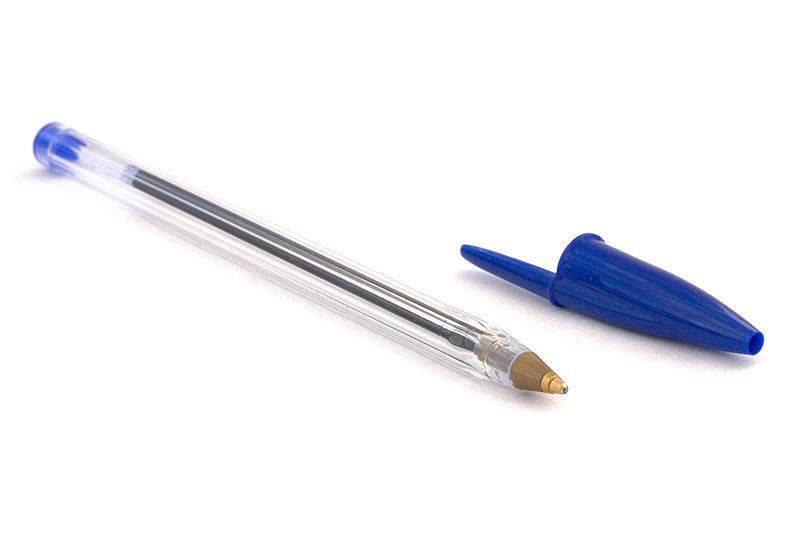
You might not notice anything funny about this picture, especially considering how often ones like it surround you, but there is an example of the quintessential here.  Why is there a checkbook with a fountain pen on top?  Do you own a fountain pen?  Have you ever used one?  If you do own one, do you make out checks with it?  For some reason, the fountain pen is, possibly subconsciously, our quintessential notion of what a pen is.  Ignoring that 99% percent of all the pens you’ve ever used in your life are roller, gel, or ballpoint pens, the fountain pen represents what all pens aspire to be. 


Here is another example.


This, the brush, the cup, the shaving soap, the straight razor, is the picture of quintessential shaving for men.  But who do you know who shaves with a brush, soap, and straight razor?  Granted there are a few, but not many. 
Record players, gin martinis, straight razors, fountain pens, barber shops, big band night clubs where the manager walks around in a Humphrey Bogart style dinner jacket, these all subconsciously sit on the list of the quintessential in my mind.  Looking at the list, it is clear I should have been an adult in the 1940s, but I’m sure I’m not the only one.


The most perfect version of something is more often than not entirely unattainable.  So here’s a challenge.  Sign your checks with a fountain pen.  Start a record collection.  Get a straight razor and a brush.  Do something quintessential. 

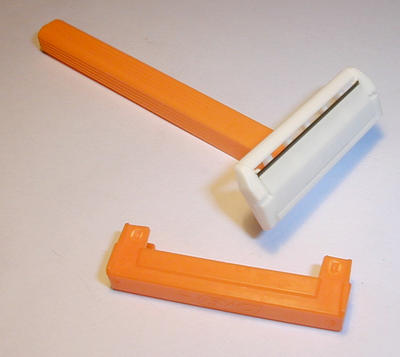
Life is too short to obviously resign yourself to these:


Monday, February 18, 2013

On Faces


I find it interesting, and a little hilarious, that I cannot see my own face without outside help.  

I remember the first time I really realized the significance of not being able to see my own face. I was at Summit Ministries in Dayton, Tennessee, the summer of 2007. The topic my small group was discussing somehow went way off track, and we ended up talking about bathrooms for some reason. My small group leader mentioned that he might go in the bathroom, simply to see if he had any foreign objects on his face. As the discussion went on, my mind stayed with that off-handed comment. 

Bare with this little tangent for a moment.  My small group leader needed to use an outside source (the mirror) to see if there was anything that didn't belong on one of the most distinct things about him (his face). Surely, if there was one part of our bodies that it would make sense for us to be able to see, it would be our face. 

But here we are, our over-developed acne, the bit of mayonnaise and the running mascara, all out of our view. Surely we are unaware of these hideous blemishes which shout their presence to all who have eyes. Because we are unaware, we do nothing about them. They stay there, for all the world to see; as we continue on in our self-confidence, unaware that anything is wrong. 

The reason that I found this off-handed comment so interesting is what it might reflect about our human nature. Is it possible that the most distinct features and the characteristics by which others know us are hidden from our view without the help of an outside source to see them?  If the most obvious thing about us also happens to be our biggest blind spot, then we most certainly need to be in community with other people.   

There is no doubt in my mind that we were created to be in community - to need other people to function as a whole person.  

In the first chapter of James, the author uses this example when talking about being a doer of the word, and not just a hearer. It says: 
“…he is like a man who looks at his natural face in a mirror; for once he has looked at himself and gone away, he has immediately forgotten what kind of person he was.” 


Monday, February 4, 2013

Rest: Our Response to The Beautiful


If insomnia were a character quality, I would be venerated on the spot. 

I do feel fortunate, though, that my particular flavor of insomnia only strikes when I have some kind of idea which I am excited to flesh out.  This means that as far as long, lonely nights go, mine are fairly productive.  Insomnia is my response to the curious.

Sleep is an interesting idea, spiritually speaking.  We are no doubt familiar with the concept of rest and how that is something God wants us to do – no doubt, for our own good.  Those two must not be exclusively the same since one can have a restless sleep and a restful experience while fully awake.

This reminds me of an experience Caroline and I had in a museum in St Augustine.  We were wandering around the city, with nothing in particular to do, and we poked our heads into a small art museum.  I cannot tell you why, because art has so rarely affected me in any significant way, but Caroline and I were moved to silence by this art.  We stayed in this small shop for close to two hours, looking at each piece by an artist I cannot now recall.  Two hours we marveled in the face of the beautiful.  When we walked out of that small shop, and were reborn into the street of St. Augustine, I took a deep breath of the hot afternoon air, and felt like I had just woken up from a long and restful sleep. 

One of my favorite words is “insatiable,” because it has a driving sense of internal thirst for something.  I often feel this driving thirst, and I think it is this thirst that keeps me awake at nights.  It is my curiosity monkey that will not leave me alone.  But when we walked out of that museum, we were satiated – full and content.

To rest is to relax every muscle in your mind and come to rest in the eye of a storm, momentarily knowing that it is okay. 

I think rest is our response to the beautiful.  This may be why God gave us beautiful Sunday afternoons to take a picnic somewhere, or sit at the beach, or walk in the woods.  I think He likes it when we experience rest as a response to His beauty.  Our greatest rest, of course, comes gradually, as we see more and more of Him.   


Wednesday, January 30, 2013

Resolved

These are some resolutions I wrote in 2009 during a class that lasted longer than my attention span.  I find them useful to reread.

Resolved: To never err on the side of caution where God has called me to take a risk

Resolved: to not speak poorly of others behind their back, and to only do so to their face when I believe will bring some good to them.

Resolved: to not let the personality or appearance of someone cause me hesitation in sharing the gospel with them.

Resolved: to try, as best as I can, to love all people.

Resolved: to weigh the profit of any task against its importance in eternity.

Resolved: to live, as well as I can, with my own mortality in mind.

Resolved: to never open my mouth in prayer if my motive is a selfish one.

Resolved: if (or rather, when) I fail any one of these resolutions, I will not doubt the great forgiveness found in the grace of God.

Resolved: to never treat the greatness of God as common place.

Resolved: to never waste emotions on inanimate objects or unchangeable
circumstances.

Resolved: to go through my possessions often and see if there is anything which I would be ashamed to hold before the eyes of God.

Resolved: to pair actions with my beliefs.

Resolved: to consider I may be wrong before any disagreement damages a relationship.

Resolved: when I am confronted with my own error, I will not value my pride over the recognition of truth.

Resolved: to never, as well as I can, trade something which is best for something which is merely good. 

Resolved: to read this list often, act on what I've written, and add to it when I can.

Resolved: To not let nameless, vague, irrational fears cause me hesitation in following through in God's will.

To love everyone. Regardless:

of their response
of their personality
of their race
of their usefulness to me
of their offences against me or anyone else
of their possibility of change
of the possibility of repayment 
of their character
of how annoying they are
of how incompatible we are
of whether or not they ever know how much I've done for them
of how I feel
of who else loves them
of how long it takes
of how capable of love I feel
of how many times they've failed 
of who knows

Friday, January 25, 2013

That Nameless Quality

It would seem that after all the study of what character is and how it should be cultivated, every possible character quality would have a definite name.  But I have one to add that I have yet to find a name for.

I have breakfast with a group of men every Tuesday morning at 6:00am.  Each of these men are significantly older than I am - almost any one of them could be my father.  One of the reasons I need this time for my own growth as a person, is that each of them has this nameless quality that sits on the tip of my tongue, but avoids being pinned down with a single word.  
Let me describe it.

There seems to be a kind of restedness that comes with living a long and full life - A kind of settled wisdom.  It is the kind of settled wisdom that comes from having spent many years walking with God and having been forgiven of many faults and having seen provision in many ways, having been very, very wrong and still loved in spite of it.  It's the kind of calmness that says "I've seen this before...yeah...it's gonna be okay."  It's the peace that comes with experience.  It's the assurance that comes with having seen a lot.  

It's like anxiety and worry have given way to faith and peace.  If there is a word for this, I do not know it.  But this realization tells me that language is running as fast as it can to keep up with the depths of our pursuit of God, and that it is not doing well.  

Maybe it's best that it doesn't have a name.  Maybe, like the character quality itself, it is best to be experienced, rather than discussed.  Maybe language will always fall short of the depths of the human soul.  If so, that gives me great hope for the human soul.

Tuesday, January 8, 2013

Thoughts on Jesus and my Heart


*This idea, and most of its development, is due to Quinten Miller, in a conversation we had over breakfast this morning. 

  
The Christian idea that Jesus lives in your heart has always troubled me.  I know that it is meant to be poetic, and representative, and spiritually speaking, but still, it has always sat funny in my mind.  Allow me to be a bit critical for a moment – it has always seemed that if Jesus could fit in my heart, he is a very small Jesus, because my heart seems like a small place.  When I imagine the scene of Jesus moving into my heart, I imagine it looks something like this.

Me: “Hi Jesus, come on in…oh, you didn’t need to wipe your feet, but thanks anyway.  Woah, it got pretty cramped in here, didn’t it?  Lemme just…no, well if you…yeah, I’ll stand here and put my arm liiiike this…so then you have room to sit down on that corner right there.  There.  Comfortable?  No?  Sorry about that.  Can I get you something to drink?  Oh, I can’t quite get to the sink…oh, you brought living water?  That was nice of you.  Well.  This is….cozy…..*long pause*…..so…..you’re here for eternity huh?  …know any games?

To really understand the poetics of what happens when the idea of Jesus living inside us, we need to broaden our understanding of what our internal selves are.  Imagine the space you are in right now.  Move out to the building you are in and imagine the whole aerial view.  Picture the city block.  Move out again to the side of town.  Move out again the whole city with its surrounding cities.  Move out again to the view of the state as a whole.  The country.  The hemisphere.  The world.  Move out again to the solar system.  The galaxy.  You can’t even make out the speck that is the world you live on at this point.  Move out again where our galaxy is a small part within the surrounding galaxies, and further and further out. 

This is not simply an exercise in the grandiose or the awe inspiring or the sublime.  Come back to the room you are occupying right now.  Zoom in on your chest cavity.  Zoom in again on your lungs and internal organs.  Zoom in to the fluid that surrounds and maintains the environment that keeps you breathing without any conscious thought on your part.  Zoom in again on the droplets of fluid that keep you alive.  Zoom in again on the molecules that comprise that drop, and the smaller elements that comprise those molecules.  Even closer at the atoms that make up those elements. 

There is an infinity in both directions – outward and inward.  Socially speaking, we could give our lives and energies to developing the external infinity, the impact we can have on others or the affect we can have on the world.  We can put up a front of caring or empathy or a façade of love, and neglect the infinity that is our internal selves.  How many pastors or ministers have given their lives to ministry, only to wreck their marriages and compromise their integrity?  What good is it to give your life for a cause, when you have neglected the infinite inward self that makes up your soul? 

I now have a new understanding of what it means for Jesus to be inside my heart.  Here is what it looks like:

Fog is rolling in from somewhere in front of me.  It is quiet and dark where I’m standing.  I take one step and the sound of my foot goes out into the darkness and seems to never stop.  There are no markers for me to get my bearings, and there is so little light I can hardly see past the fog that my breath makes.  It’s cold.  I shout.  Jesus is supposed to be here somewhere.  I wave my hands around in a circle trying to feel for anything.  Suddenly, Jesus is next to me.

Jesus: “Hi Stephen.”
Me: “Hello Jesus.”
Jesus: “Do you know what I want to do in here?”
Me: “Live, I guess?  There’s more room in here I think, you’re welcome to set up camp wherever you like…”
Jesus: “Live?  Yeah, sure, we’re going to live, but what I’m really looking forward to, is turning everything you see into something.”
Me: “What are you going to turn it into?”
Jesus: “A garden.” 


Friday, January 4, 2013

Intelligence vs Imagination

Victor Hugo once said that intelligence it's your wife, while imagination is your mistress. I disagree, though not simply on moral grounds. I disagree with the disassociation between how we ought to think and how we prefer to think. Hugo's metaphor has in it a dutiful mode of seeing the world, and a more enjoyable, exciting, pleasing mode. I have not found this distinction to be true in my life. I find they are, indeed, separate things, and certainly one is more exciting than the other, but I find I require them both.  One is not a pleasure any more than the other is a duty.  
So here is many edit of Hugo's sentiment: intelligence is the ground we stand on, imagination is the air we breathe. I would no more think that I could build a city on air, than think I could breathe dirt. But I find I need them both to live.  The ground allows me to build, the air allows me to fly.  

Sunday, April 8, 2012

Doctrinal View

People have often pressed me for my particular views on some of the more sensitive issues in higher theological doctrine; predestination, free will, losing salvation, baptism essential for salvation, infant who die going to heaven or not, and so on. Here is my answer to all of them. If debating high levels of theology somehow brings either of us into a closer relationship with God, makes either of us fall in love with Jesus in a deeper way, or brings unity among brothers and sisters in Christ, then I will gladly discus it with you. If, however, you are arguing to gain spiritual points, or to prove that you have a better understanding of God than another brother or sister, or to win a convert to your faction of Christianity, count me out.

If you are arguing that Christ does not save us, or that one cannot be saved then there is some urgency for that topic. But, if we are simply debating the method by which Jesus does save us, or the mystery behind God’s hand in the world, then I wonder about the immediate need for an answer. The truth is that there are greater mysteries in our faith and bigger issues to which we trust God. Here’s the issue. We would rather argue over the ways in which God could save people, rather than be that means of salvation.

The thing about the debates over salvation is that it is almost always, as far as I have seen, not a debate for one’s own salvation. The debate is almost always whether or not someone else is saved or can be saved or decided to be saved or was destined to be saved and on and on. What I mean by this is that, the argument is always based on the premise that the person speaking is in fact saved, regardless of the method they believe it came about by. So regardless of which side you choose, both sides are believers in Christ—whether they believe that they chose that or that they were destined to be saved, or that they were destined to choose or chose to be destined… Here’s the bottom line: are you now, as this argument is being debated, in a relationship with God? One would assume that the people arguing about it are the ones who have crossed over anyway. If so, stop arguing and trust that the God, who saved your soul from the brink of Hell, knows what He’s doing whether you do or not.

the time it has taken for countless Christians to argue over the minutia of the mystery of how Christ came to save us, I wonder how much good could have been done from your position of having already been saved.

God said love those who hate you and make disciples of all the nations and that He would help you and I do it. I say we do it.

Monday, January 3, 2011

Failed Goals

So my goal to write a book before the end of this year was a bust. Not a total bust, but if you can only cross of goals once they're finished, then it was just as much a bust as if I had never even tried. The truth is that, without any goals, I wouldn't have even tried. So this year, my goals will be to attempt goals...then I can cross off as many things as I attempt.

I like setting high goals for myself, with the full knowledge that I probably won't make it. That's not discouraging to me, it's idealistic. If I set goals I know I can achieve, they're not really goals; they're just declarations of activities before the fact. There has to be something wagered. A goal, to me, is me betting against myself, and betting that I'll come through. Even if (or rather, when) I don't, I probably got closer to the goal by setting it, than I ever would have just thinking about it.

So I set goals, and I don't make it. But I tried. Again. So this year? I'll keep working on this book. I'm also experimenting in short stories. I'm just writing paragraphs at a time, trying to get back into descriptions and scene writing, rather than essay writing.

Sunday, March 28, 2010

Lessons Learned

"Which of you, if his son asks for bread, will give him a stone? Or if he asks for a fish, will give him a snake? If you, then, though you are evil, know how to give good gifts to your children, how much more will your Father in heaven give good gifts to those who ask him!”

This verse always confused me on some level. Essentially, what I’ve always taken from this verse, is that ‘God will give me good things if I ask for them.’ So as long as I made sure that what I was asking for wasn’t evil, I was home free.

I had a 1988 Mitsubishi Montero, two door truck. It wasn’t a bad truck; I actually kind of miss it. The only problem I had with it is that it always broke down at just the wrong times. To start off, my Dad and I spent almost two years, off and on, trying to get it running for the first time. There was an entire laundry list of things that went wrong, every time we were ‘almost there’. Among other things, this truck taught me to be patient with inanimate objects. Other situations taught me to be patient with people, but this truck taught me not to waste emotions on just things. If I got mad, the truck just sat there, looking at me as if to say ‘tell me, what is it that you think you just accomplished by that?’ It didn’t care. It wasn’t even close to caring about my frustration—even though it was the sole reason for all of my anger and despair. It just sat there, seemingly oblivious to my anger. Obviously, it wasn’t going to change, so in the end, I was the one who ended up changing.

During the months and years when it was so close to being fixed, I kept praying that God would fix it. I analyzed the situation. Were my motives evil? Nope, certainly my motivations were not evil. Was I asking for something evil? Again, I was not asking for anything evil. So according to Matthew 7, God is going to give it to me, because "Which of you, if his son asks for bread, will give him a stone?” Clearly God would answer my prayer.

I don’t think I was wrong for believing this. In retrospect, I see that it certainly wasn’t wrong—it was simply incomplete. I knew that if I asked God for metaphorical ‘bread’, He would not give me metaphorical ‘stones’. So why wasn’t He fixing my truck? In fact, why isn’t He doing a lot of things we see as good? Why is he letting evil people rise to power? Why do women have miscarriages? Why do we pray for one good thing, and get something else entirely?

I don’t have answers to these questions. In fact, I don’t have answers to a lot of questions. I may not have answers, but I may have something better. I have access to Truth. I’m not talking about truth in the sense of ‘things which are true.’ I’m talking about Truth, with that capitol ‘T’.

Here are two things I’ve learned: the first is that the world is not divided into the two categories of good and bad. There are good things, there are better things and there are best things; all of which can be abused. Though it would be good for my truck to be fixed, God saw that it was better that I learn patience through a broken truck. The second thing I’ve learned is that often, we may think that we’re asking for bread and God is giving us stones, simply because He can. But picture this: what if the entire time, we’ve been asking for the stones and God, in His mercy, has been giving us the bread. We are like children, grabbing the bright shiny knife, thinking that that is exactly what we want or need. Our loving Father, who knows far better than we, holds back our hands—not from something evil, but something that He knows better than to give us. So we cry, like the children we are, for the things we think we need—a fixed truck, a fixed relationship, the money to go on that trip, the free time we think we need.

Here’s the bottom line: if you have already trusted God with your eternal soul, by trusting in His Son, Jesus, then you have no reason in the world to doubt His massive capability to govern your life. If He gives you what you did not expect, don’t assume that you know better than He. Our Father has always had the greatest regard for your best. Don’t doubt His intentions the moment you can’t see His hand.

Thursday, December 24, 2009

The Best Day of My Life

This the transcript of a speech I did in 2007 in a Christian Speech and Debate League.


--------------------------

The best day of my life, will be the day I die! I can not wait to die!

If this sounds dark, depressing or just plain weird, then you’re just the person I want to talk to. I have something that I ecstatic to share with you. I have freedom from the fear and mystery of death. I have a crazy, God-centered, anticipation to die. Not anticipation of death, but of dying. I’ll explain the difference in greater depth later on. My goal today, to persuade Christians to live to die, not in a morbid, dark way, but instead by opening your eyes to what life is, and what it really means to die.

My goal, is to persuade Christians to live with this whole new twist on life, living on a higher plain, by directing their focus back to the center point of our faith.

I’m going to split this into two sections. The first will focus on why Christians shouldn’t fear death or dying…at all. And the second section will focus on why Christians should actually be looking forward to dying, with this God-centered anticipation. And that’s the true essence of what I want to talk about.


Section One

Within section one, there will be three points on why Christians should not fear death, and not fear dying. And at the end of this first section, I hope that you will see my reasons for believing what I believe about death.

The first point is that you will die. Sorry, It’s gonna happen. The statistic is staggering, ten out ten people die. I once got a quote through email; it said ‘health is merely the slowest rate at which one can die.’ And that may seem a bit depressing, but it’s true! Regardless of what we want, think or do, we will die. Everyone does.

Hold on. My point is that we should not fear death. But my first reason for this is that death is inevetable. But isn’t that the reason that people fear it? Don’t we instinctively fear what we cannot run away from, or escape?

Think about it this way: Assuming you don’t die in the near future, tomorrow will come. Do you fear tomorrow? Probably not. Tomorrow is coming whether you like or not, just like death.

Now, you may be afraid of what you have to do tomorrow. For example, many people fear public speaking. So the day before you are going to speak, would you be afraid? But I doubt that anyone feared the day itself. Now, let’s take that logic, and apply it to death. It’s wouldn’t make sense to fear death, because it’s inevitably coming, just like tomorrow. And of course, some people may fear what they have to do on the day of their death. But Christians are not any of those people.

And that is the second point in section one. Christians have nothing to fear in being judged by God, because we have been made right through Christ Jesus.


This brings me into the third point.
The sun rises every morning, without my saying so, or not. I have no control over it. So I don’t worry about it. My worrying about the sun won’t change a thing. The same thing goes for our deaths. In Ecclesiastes 8, it says that no man can prevent the day of death. So, if I can’t delay it, it is pointless for me to worry or be concerned about it.
I cannot stop the day of my death, just like I can’t stop the earth in motion.


But is that always true? Is it really true to say that not being in control is sufficient reason to not worry? Any parent who’s gone through driver training with their teenager will know what I’m talking about.

There are situations where not being in control is precisely why we worry. Driver training, roller coasters…although for me, those two were probably the same! The point is that there appears to be situations where you’re not in control, and it’s fine, like the stars and the Sun. But there’re also situations where you’re not in control, and you are definitely NOT fine!

And this is the essence of the third point. What’s the difference? How can you not be in control of the world, and be fine with that. And not be in control of the car, and NOT be fine with that.

The deciding factor between the two, in my opinion is actually two reasons. The first is the knowledge of who is in control and the second is whether or not you trust that person with being in control. So you’re ok with God controlling the universe, but uncomfortable with your teenager in controlling the car.

But here’s the clincher! I trust God to keep the universe in check, right? Of course! Well, that same God has complete control over me and my death. Psalms 48:14 says “For such is God, Our God forever and ever; He will guide us until death.” So, the same God who controls the earth and its orbit in space has complete control over me and my death. I have the freedom to hand over all worries and concerns about the time of my death into His perfect hands. I can truly be fine with not having the ability to delay my death. My death is where it belongs, in God’s perfect hands. I don’t have to worry about it anymore. And you don’t have to worry about ether. We are both free from the fear of death, and the fear of dying.

It was Jim Elliot who said, “He is no fool who gives what he cannot keep, to gain what he cannot lose.” That says it all! I’m no fool because I gladly give up my life (which I cannot keep anyway) to gain what I cannot lose!
Hebrew 2:14
14Therefore, since the children share in flesh and blood, He Himself (speaking of Christ) likewise also partook of the same, that through death He might render powerless him who had the power of death, that is, the devil,

So God has made powerless the one who had the power of death. Death, and the one who controlled it, have no power over us anymore. God has taken away the fear of death. So we as Christians have no business putting ourselves under that fear again.

Paul said in 1st Corinthians 15:55
"O DEATH, WHERE IS YOUR VICTORY? O GRAVE, WHERE IS YOUR STING?"
We should be the only people in society who have the crazy reputation of not fearing death.

So in conclusion of the first section, death is coming so you don’t have to worry about it or when it comes. God is in complete control of your death. And we can trust God, with that control. Death brings everyone to Christ, and Christians have nothing to fear in that meeting. So, there’s really no rhyme or reason for Christians to have a fear of death or dying. God has taken that fear away so that we can be free in Christ.


Before I go into part two, I need to address something that I alluded to in the beginning. I said in my introduction, there is a difference between looking forward to death, and looking forward to dying. And I need to explain that in more detail. Death is when your body dies. Dying is your soul moving on to eternal life. The center focus of death is the decomposing of this body. The center focus of dying is the moving on of this soul. If dying is going to your friend’s house, death is the act of leaving your house. I look forward to dying, moving on to eternal life, not to death, the fading of this body.


This brings me into part two

Why you should be looking forward to the day you die.

Now, I don’t fear roaches, but that certainly doesn’t mean I look forward to them. In the same way, you may not fear death, but it doesn’t mean you look forward to it.

Revelation 21:4 in reference to the end of days, it says:
“And God will wipe away every tear from their eyes; there shall be no more death, nor sorrow, nor crying. There shall be no more pain, for the former things have passed away.”
Who wouldn’t look forward to that? Death, crying, sorrow, pain will all be gone forever.

But I said a “God centered, anticipation to die.” Not a comfort centered anticipation.
And that’s what it is: God centered.

Personally, I like Norman Rockwell pictures a lot. I’m a sucker for Norman Rockwell. I would have considered it a great honor if I could have met him, and spent some time talking with him. That would have been fantastic! I could enjoy his art and be amazed at his creativity, but that would all fade into the background if I could have met him.

Now think about this, God is the artist and you are the art. How you could be amazed at his creation and enjoy this life, but that all fades into background at the thought of finally spending the rest of forever with the ingenious artist of your entire being!

No pain and no tears are certainly wonderful thoughts. But those are not the reasons I look forward to my death. ‘A God-centered, anticipation to die.’ That is the reason. When I die I can finally fall at my savior’s feet, and love Him and worship Him for the rest of eternity.


The disciple Andrew was this kind of man. According to “Foxe’s book of Christian martyrs” by John Foxe, he was brought before the Roman proconsul told not to preach in the name of Jesus Christ, or he would be crucified. Andrew replied “I would not have preached the honor and glory of the cross, if I feared the death of the cross.” He was condemned to die. Upon seeing the cross on which he would die, he said “Oh cross, most welcomed and longed for! With a willing mind joyfully and desirously, I come to you, being the scholar of Him, which did hang on you, because I have always been your lover, and yearn to embrace you!” Whoa! Where are the Christians like that today? Where are they? It is my goal to be one, and to raise up others out of the ashes of a life centered faith. The entire premise of our Christians faith is the dying. The dying of Christ, the dying to self, dying to sin, looking forward to the day where death itself dies, and we can enjoy the life that we died and enjoy the one who died for us.


After saying all this, I need to make this point. I would never dream of taking my own life! I love God too much to do that. It’s like two couples who are dating. The first couple says, “To show how much we love each other, we’ll sleep together before we’re married.” The second couple says, “To show how much we love each other, we will wait until we’re married to sleep together.” Both couples lay claim to the reason of showing their love, but with opposite outcomes. If the first couple truly loved each other, they would never dream of jumping the gun like that. If someone truly loves God, they would never dream of taking their life. I love God too much to take my own life.

But really, can you imagine waking up every morning and saying “God, if today is the day that I can finally see you, then that’ll be the best day of my life!” What a beautiful thought! If you look forward to death, then it can’t scare you! And if death has no hold on you, what does? What can scare you, if death brings what you most want? Eternity with the God you love. Embracing death, with God at the center of your life, puts a whole new paradigm on life. Life is a time of spreading this fire that God has set in your heart. What if you’re persecuted? What if you’re a social outcast? What if…? Count it all joy, because trouble now, brings treasure in heaven. What if they kill you? So? Then that would be the best thing that could happen.

So life is full of tribulation, which brings treasure in heaven. Death achieves what life cannot. Death is the best thing a Christian can hope for. But as Mark Cahill puts it, there’s “One Thing You Can’t Do In Heaven.” And that’s sharing Christ Jesus, here on earth. Life is a harvest field, and death is the only medium between this life of pain and eternal life with God. Live to die. Don’t be discouraged, however many trials come today, or the rest of your life, we have a beautiful promise at the end of the road.

This is the new twist on life, and higher plain that I mentioned in the beginning. This is a whole new paradigm. Life is the only time we can spread the word of God. If we’re rejected or persecuted, that stores up treasure in heaven. So life holds no fears, and to die is our reward. Keith Getty put it this way in his song, “In Christ Alone”, “No guilt in life, no fear in death, this is the power of Christ in me.” Death brings what Christians live for, eternal life with the God we love. What is there to fear in that?

The best day of my life, will be the day I die!

My Brother Joshua

This is a paper I wrote for an English assignment. Our assignment was to write a profile of a person in our life who has had a great impact on us. So as a practice in allegory, I profiled Jesus as my big brother, and called him Joshua.

----------------------------------------

My Brother Joshua

My brother Joshua is a man worth profiling. He is my oldest brother by adoption and my best friend. I first met him when I was very young, but finally decided to be adopted by his family in the spring of 2006. Joshua is not hard to like. If anyone really gets to know him, they will find him the most faithful of brothers. He and I became very fast friends and it’s not hard to see why. He has a passion for helping others. This is what first drew me to him. People that are despised, he loves. People who are outcast he takes in. He loves everything America despises. America loves the beautiful, the whole and the strong. Joshua loves the unattractive, the broken and the weak.

I will never forget the day I finally made the decision to be adopted. It was mid-May and was about to turn sixteen. I was working in my yard when Joshua stopped by. He and I talked while I worked.

“Hey Stephen”

I smiled because whenever he says, “Hey Peter” like that, I know he is going to teach me something worth knowing. I always enjoy it when he chooses to teach me something. He is very wise and very patient. He loves to teach in ways that, at first, confuse me. Generally he will say something that seems simple, but as soon as I apply it to my life, I find it’s harder than it appeared.

“Hey Stephen” he said. “You’ve got one day to live.”

I paused. His odd statement puzzled me. I have one day to live? Did he know something about my health that I didn’t? Why did he say that? I like to try to figure out what he means on my own, but this time I had to ask.

“What are you talking about?”

He smiled. He knew he had piqued my curiosity.

“Look at it this way,” he started. “Yesterday is gone. You can’t change yesterday anymore than you can change the first day of time. It’s completely lost; only found in your memories.”

He gave me a second for it to sink in, and continued.

“And who has guaranteed you tomorrow? What rule is written that says you will have another day? Yesterday only exists in your memories, and tomorrow only exists in your plans. The only time you truly have, is the brief moment we call today. You only have one day to live.”

The second time he said it, the phrase made more sense. I did only have one day to live. This was Joshua’s way of saying “our offer of adoption still stands. What do you say? You want to be my brother?”


Over the next few days I talked to my guardians and Joshua’s dad and decided that it was the right thing to do. Joshua is now my oldest brother, but he is not my only sibling. I was adopted into a large family. A few of my new siblings fight far too much. This is the one drawback to my new home. They disagree on a lot of little things. But the one thing that we all agree on is that we really like Joshua. We all love him and try to let our love be the thing that keeps us together. It’s no secret that we almost idolize him. Some say we idolize him too much and others say we don’t idolize him enough. Still, he’s everything that we want to be. We just have a hard time agreeing on other things. But Joshua is always patient and always kind. He never lets our bickering get to him. He is the living example of what love and strength is.

Joshua is by far my best friend. No one knows me nearly as well as he does. But friends don’t become best friends just because of the good times they’ve shared together. Usually, they become best friends because of the hard and difficult times they’ve shared. Joshua has always been there when I needed him. He always hurts with those who are hurt. But even in the hard times, he’s trying to teach me something. Once, after a very painful breakup, he taught me one of the most helpful lessons I have ever learned. We went for a long walk and spent several minutes in silence. Then he said,

“Hey Stephen”,

in that special way again. But I couldn’t find the courage to smile this time. He continued,

“Gold is put into a fire for a very important reason.”

Again he gave me a moment to let it sink in.

“When gold is put into the fire, it melts until its liquid. Then the impurities rise to the surface and are scraped away. Gold cannot be purified unless it is put through a fire. This is why we suffer – to be made strong and pure. Don’t ever run away from hard times. In every fire you go through, there is a lesson. Look for it. If you don’t look, you may miss the jewel that’s only found in the ashes.”

As he was still speaking, I already knew that it was true. I was a little ashamed of myself for being so easily distracted. I assured him that I would be looking for the lesson.

Joshua has this strength and love because of our dad. He and my new father are exactly the same. If anyone wanted to get to know my dad, they should get to know Joshua. He does what he sees our dad doing. He opens our door to anyone who knocks on it, and helps anyone who asks. He and his dad decided that they would not force me into being adopted and they gave me the final decision in the matter. All they did was offer. The choice was mine. There are many reasons why I chose what I did. But all of the little reasons pale in comparison to the one factor of Joshua.

Some people wanted to know more about the actual person my brother is. In this profile, I’ve only told what I know first-hand about him. There are other books written about him, if anyone wants to know about the man himself. You see, Joshua is a Hebrew name. When it is translated into Greek, it’s Jesus. Joshua is Jesus Christ. This entire essay is an allegory. It has a truth deeper than the literal meanings of the words. But my adoption is a real as night and day, black and white, and heaven and hell. When I was adopted as a member into the family of God, Jesus became my older brother. We both share the same father, and my earthy parents became only my guardians. Other Christians are now my brothers and sisters. And it’s true; they do fight far too much.

It’s hard to describe someone who means as much to me as Joshua does. In all honesty, I owe everything I have and everything I am to him. No one person has ever had as much impact on my life as Joshua has. Needless to say, my brother is the man I hope to become. Through him I have grown and become wiser. He is my hero, my mentor, and my friend. No one would do badly if they tried to be more like him.

Resolved

These are my own resolutions for my life, as inspired by Johnathan Edwards (the theologian). I wrote these in a class that lasted far longer than my attention span.

----------------------------------------------------------------
Resolved: To never err on the side of caution where God has called me to take a risk

Resolved: to not speak poorly of others behind their back, and to only do so to their face when I believe will bring some good to them.

Resolved: to not let the personality or appearance of someone cause me hesitation in sharing the gospel with them.

Resolved: to try, as best as I can, to love all people.

Resolved: to weigh the profit of any task against its importance in eternity.

Resolved: to live, as well as I can, with my own mortality in mind.

Resolved: to never open my mouth in prayer if my motive is a selfish one.

Resolved: if (or rather, when) I fail any one of these resolutions, I will not doubt the great forgiveness found in the grace of God.

Resolved: to never treat the greatness of God as common place.

Resolved: to never waste emotions on inanimate objects or unchangeable
circumstances.

Resolved: to go through my possessions often and see if there is anything which I would be ashamed to hold before the eyes of God.

Resolved: to pair actions with my beliefs.

Resolved: to consider I may be wrong before any disagreement damages a relationship.

Resolved: when I am confronted with my own error, I will not value my pride over the recognition of truth.

Resolved: to never, as well as I can, trade something which is best for something which is merely good.

Resolved: to read this list often, act on what I've written, and add to it when I can.
----------------------------------------------------------------------------------------------
10.27.09
Resolved: To not let nameless, vague, irrational fears cause me hesitation in following through in God's will.
----------------------------------------------------------------------------------------------
11.01.09
Resolved:
To love everyone. Regardless:

of their response
of their personality
of their race
of their usefulness to me
of their offences against me or anyone else
of their possibility of change
of the possibility of repayment
of their character
of how annoying they are
of how incompatible we are
of whether or not they ever know how much I've done for them
of how I feel
of who else loves them
of how long it takes
of how capable of love I feel
of how many times they've failed
of who knows

Question Everything

Warning: This idea has the potential to be abused by the people who simply want support for their unhealthy, bias rebellion. This is not what I am advocating. This idea of questioning what we naturally assume is simply a technique which should be used in moderation and in a spirit of truth. Dear rebellious heart, I do not side with you or support your rebellion; I simply want those who blindly follow what the person ahead of them to wonder if they know where they’re going. This is not to incite rebellion; it is to inspire thought. There is a severe shortage of those who think; there is never a shortage of those who rebel. Please think.

This is based on the premise that there is a truth to be known; that truth can be attained. Granted, this idea of an attainable truth is not very popular in our humanistic, postmodern society, but I believe that if you search for truth, it can be found. I believe that our God is a God of order and design; that He has not set us adrift in the sea of blind luck and chance. I believe that our God has His hand in our world and is directing our world in a particular way. Matthew 6:25-26 says

“Therefore I tell you, do not worry about your life, what you will eat or drink; or about your body, what you will wear. Is not life more important than food, and the body more important than clothes? 26Look at the birds of the air; they do not sow or reap or store away in barns, and yet your heavenly Father feeds them. Are you not much more valuable than they?”

I believe that since our God is at work in our world, and that since our God is a God or design and order, we can see that design and order in His creation. Since we can see the design and order in the physical world, I believe we should be able to see the same design and order in the spiritual world as well.

I don’t know where you are right now as you read these words, but I can be fairly certain that you are in a physical location (ie. Your bed, a desk, couch, bath tub, outside…etc). So since I am sure that you are in a physical location, let’s do an exercise to illustrate what I mean. In a minute, I want you to look up from this note and look for, and note everything in the room that is red (if there is nothing in the room that is red, then pick a different color). Ready? Go.

(Seriously…why are you still reading? Just bear with me and try it.)

How did it go? Did you find stuff that was red? In the room I’m sitting in (I wrote this in the dorms at CIU) I can see the red gauge on the heater, the red light blinking on the smoke detector, the red light on my radio, some red letters on a bag of sugar, a red calendar and a warning label on a wire. Now think about it: without looking up, how many things in the room could you name from your search that are blue? Because you weren’t looking for things that were blue, you may find it difficult to recall from memory things in the room that are a different color than the one you were looking for.
What am I trying to say here? The point is that you found what you were looking for. You set out with a goal of something to find, and you found it. But you also didn’t find something else. Not only did you find something, you didn’t find something too. You set out to find red, and you found it. You did not set out to find yellow, and you (probably) didn’t find it. This is an encouragement and a warning.

If you set out to find truth, you will find what you’re looking for. This is true unless you either have a distorted concept of what red looks like, or there are no red things in the room you are currently in. The distorted color problem can be solved by fixing your idea of what red looks like. The lack of red objects in a room can solve itself by changing your physical location.

In a larger sense, if you set out to find out the truth about a bigger subject than colors, you will find it, provided you don’t have a distorted idea of what that truth looks like or from where you are, you simply can’t see the truth. The distorted truth problem can be solved by fixing your idea of what that truth (objective truth, not subjective truth) looks like. The inability to see that truth can be solved by changing your perspective.

That is the encouragement. The warning is that if you set out to find a particular color, you will find it, but that may be all you find. Better to enter a struggle for truth without our own ideas of what answer we’re looking for. This is the difference between Inductive reasoning and Deductive reasoning. Deductive reasoning is looking for the facts (colors) which support your pre-conceived conclusion (red). Inductive reasoning is looking for the conclusion, based off of the facts. I believe we need to use Inductive reasoning in our struggle for truth. If you look at a room and search for only red, you will find it. Unfortunately, you will miss all of the other colors in the room. Please don’t make this mistake in your quest for truth on a higher level. The consequences of using deductive reasoning in our search for colors are very minimal. However, as we raise the importance of the situation, we raise the possible benefit of the right answer and the possible risk of the wrong answer.

I take this long to introduce my technique for searching for truth, because this idea is dangerous. It can be abused, often is, but it doesn’t have to be.

Question everything:

If I question a situation, a fact, an idea or anything that can be questioned, I will come to one of two conclusions (assuming I weigh the situation correctly).

1) I would discover that what I am questioning was true the entire time
2) I will discover that what I’m questioning is false


If I were to question whether or not the chair I want to sit in is truly strong enough to hold me, I would come to one of two conclusions.

If I discover that what I thought was true, is true, then my level of faith in that truth after questioning will be far greater after, than before.

If I discover that what I thought was true, is actually false, then I have come to my senses and am now wiser than I was before (assuming I’m not too stubborn to accept truth for what it is, and I’m not trying to find facts to support my belief, rather than letting my belief be formed around the facts).

This idea has the potential of great good, but power always has the potential to be abused. This is why I take this long to present this idea. Please search for truth, with a spirit of truth. Search for truth with the understanding that what you think you know may be wrong. Search for truth with the understanding that what you assume may be the most dangerous thing you believe. C. S. Lewis said, and I agree, ““The most dangerous ideas in society are not the ones that are being argued, but the ones that are assumed.” It’s the ideas and beliefs that we simply assume are true, because we’ve always thought they were true. I have no qualms in questioning the foundations of my presuppositions--for if they're true, they can handle the questioning, but if they're false, why keep holding them?